Psalm 23 Meaning, Verse by Verse
Psalm 23 meaning explained verse by verse: the shepherd, still waters, the dark valley and the table, plus how Jesus fulfills it and how to pray it today.
Also in: Español
In this article
- The full text of Psalm 23
- Verse 1: "Yahweh is my shepherd; I shall lack nothing"
- Verses 2–3: Green pastures, still waters, a restored soul
- Verse 4: The valley of the shadow of death
- Verses 5–6: The table, the oil, and the house
- Jesus, the Good Shepherd
- How to pray Psalm 23
- Frequently asked questions
- Keep going
Psalm 23 is a short prayer of trust that pictures God as a shepherd who leads, feeds, protects and restores his people, and then as a generous host who welcomes them to his table and keeps them in his house forever. Its meaning, in one sentence: because the Lord is my shepherd, I am cared for in every season, including the darkest one. Below you will find the full text, a verse-by-verse explanation, how Jesus takes up the shepherd image, and a simple way to pray the psalm yourself.
The full text of Psalm 23
Here is Psalm 23 in the World English Bible (WEB), a modern public-domain translation:
Yahweh is my shepherd; I shall lack nothing. He makes me lie down in green pastures. He leads me beside still waters. He restores my soul. He guides me in the paths of righteousness for his name’s sake. Even though I walk through the valley of the shadow of death, I will fear no evil, for you are with me. Your rod and your staff, they comfort me. You prepare a table before me in the presence of my enemies. You anoint my head with oil. My cup runs over. Surely goodness and loving kindness shall follow me all the days of my life, and I will dwell in Yahweh’s house forever. — Psalm 23:1–6 (WEB)
A note on "Yahweh." Many English Bibles read "The LORD is my shepherd." In the Hebrew text, the word there is God's personal name, written with four consonants (YHWH). Most translations follow an old Jewish and Christian custom of rendering it as "the LORD" in small capitals. The World English Bible instead writes it as "Yahweh." Both refer to the same God; the difference is only in how the divine name is rendered.
A note on numbering. This guide follows the Hebrew numbering used by most modern Bibles. Some Catholic and Orthodox Bibles that follow the Greek and Latin tradition number it Psalm 22. Same psalm, different count.
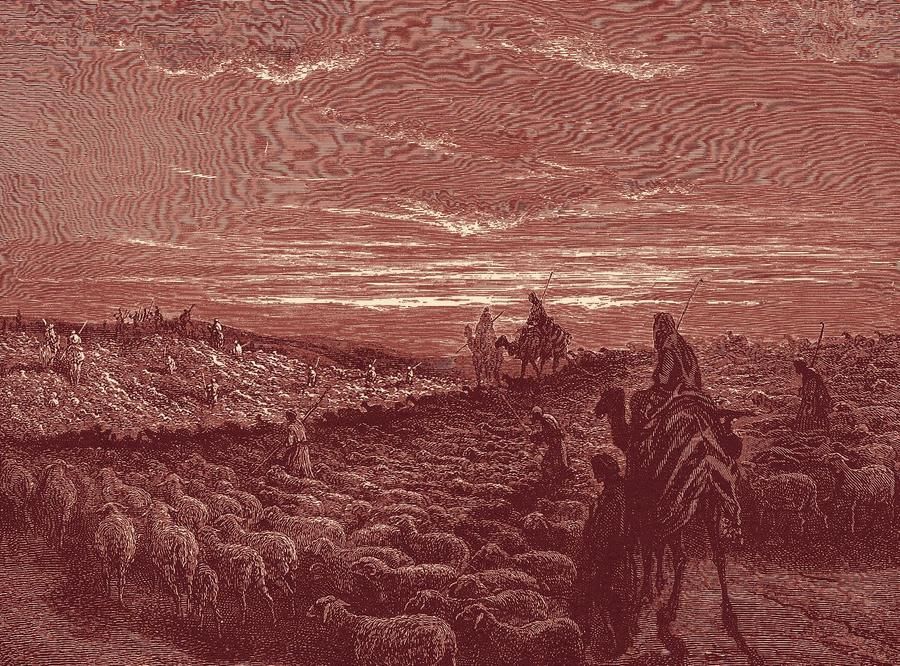
The psalm's heading attributes it to David, who, before he became king, worked as a shepherd for his father's flocks. Whoever first prayed it knew sheep: their dependence, their tendency to wander, and how much they need someone watching over them.
Verse 1: "Yahweh is my shepherd; I shall lack nothing"
The whole psalm grows out of this first line. In the ancient Near East, kings were often called shepherds of their people. Here the image becomes personal: not "our shepherd" but "my shepherd."
"I shall lack nothing" is not a promise that life will be easy or that every wish will be granted. It is a statement about relationship. A sheep with a good shepherd may face drought, cold and danger, but it is never abandoned. What it truly needs, it will receive.
Verses 2–3: Green pastures, still waters, a restored soul
"He makes me lie down in green pastures." Sheep generally lie down only when they are fed and feel safe. The picture is one of deep rest, rest the sheep could not arrange for itself.
"He leads me beside still waters." Calm water is safe to drink. The shepherd does not drive the flock; he leads, going ahead to find what they need.
"He restores my soul." The Hebrew word for soul here (nephesh) means your whole living self: breath, life, inner person. To restore it is to bring someone back, to revive what is worn out. Many readers hear in this line both physical refreshment and the deeper idea of being brought back when we have strayed.
"He guides me in the paths of righteousness for his name's sake." The "paths of righteousness" can also be understood as "right paths," the tracks that actually lead somewhere good. And the reason the shepherd does this is "for his name's sake": God's faithfulness rests on his own character, not on how impressive the sheep is.
Verse 4: The valley of the shadow of death
This is the verse many people turn to at funerals, in hospitals and on sleepless nights.
"Even though I walk through the valley of the shadow of death." The Hebrew phrase can be understood as "the valley of deepest darkness." It certainly includes death, but it also covers any season of fear, grief or danger. Notice that the psalmist walks through the valley. It is a passage, not a destination.
"I will fear no evil, for you are with me." Something important happens grammatically here. In verses 1–3 the psalmist speaks about God: "he makes me," "he leads me." In the dark valley, the language shifts to speaking to God: "you are with me." In the hardest place, description turns into conversation.
"Your rod and your staff, they comfort me." A shepherd's rod was a club for driving off wild animals; the staff was a long stick for guiding and rescuing sheep. One protects, the other directs. Both are reasons for comfort, because they show that the shepherd is present and active.
Verses 5–6: The table, the oil, and the house
In verse 5 the scene changes from pasture to banquet hall. God is now the host.
"You prepare a table before me in the presence of my enemies." The enemies have not disappeared, but they cannot stop the meal. In the ancient world, to eat at someone's table meant you were under that person's protection.
"You anoint my head with oil. My cup runs over." Pouring oil on a guest's head was a sign of honor and refreshment. A cup that runs over speaks of generosity beyond what is needed.
"Surely goodness and loving kindness shall follow me all the days of my life." The Hebrew verb for "follow" is often used for pursuing. God's goodness does not just trail behind; it chases after us. "Loving kindness" translates the Hebrew hesed, one of the richest words in the Old Testament, describing God's loyal, covenant love that does not give up.
"And I will dwell in Yahweh's house forever." The journey ends at home. For the first readers this suggested the presence of God in the temple; Christians have long also read it in the light of eternal life with God.
Jesus, the Good Shepherd
Christians cannot read Psalm 23 without thinking of Jesus' words in the Gospel of John:
I am the good shepherd. The good shepherd lays down his life for the sheep. — John 10:11 (WEB)
Jesus takes the shepherd image that Psalm 23 applies to God and applies it to himself. And he goes further than the psalm: the Good Shepherd not only walks with his sheep through the valley of the shadow of death, he enters death himself on their behalf. For Christians, that is why verse 4 can be prayed with such confidence. The one who says "you are with me" has already been through the darkest valley and come out the other side.
How to pray Psalm 23
Psalm 23 is meant to be prayed, not only studied. Here is a simple way to make it your own in about ten minutes.
- Read it slowly, aloud, once. Let the words sink in without analyzing them.
- Choose one line. Which phrase catches you today? Maybe "He restores my soul," or "you are with me." Don't overthink it.
- Stay with that line. Repeat it quietly a few times. Ask: what would it mean for this to be true for me today, in my real situation?
- Talk to God about it. Turn the line into your own words. For example: "Lord, I feel like I'm in a dark valley with my job. Help me believe that you are with me here."
- Read the whole psalm again as a closing prayer, and rest for a moment in silence.
If you pray it at night, verse 2 ("He makes me lie down…") makes a peaceful last thought before sleep. We gathered more psalms for that purpose in Bedtime Prayers and Psalms for Anxiety and Sleep.
You might also try memorizing it. Psalm 23 is short enough to learn in a week, one verse a day, and having it by heart means it is there when you need it most: in a waiting room, during a hard conversation, or awake at 3 a.m.
Frequently asked questions
Who wrote Psalm 23?
The heading of the psalm attributes it to David. Like many headings in the Psalms, it tells us how the psalm has been received and prayed in Jewish and Christian tradition.
Is Psalm 23 only for funerals?
No. It is often read at funerals because of verse 4, but most of the psalm is about everyday life: rest, guidance, provision, and the daily company of God. It is just as fitting on an ordinary Tuesday.
Why does my Bible say "the LORD" instead of "Yahweh"?
Most English translations render God's personal name as "the LORD" in small capitals, following a long Jewish and Christian tradition. The World English Bible writes "Yahweh." Both translate the same Hebrew name.
Why is it Psalm 22 in some Bibles?
Some Catholic and Orthodox Bibles follow the numbering of the ancient Greek translation (the Septuagint) and the Latin Vulgate, which combine and divide certain psalms differently. In those Bibles, most psalms from 10 to 147 are numbered one lower.
Keep going
If you would like to pray Psalm 23 with a little help, the guided prayers in Prayority include Psalm 23 set to calm sacred music, with the words lighting up line by line at an unhurried pace. You can find it, along with the Lord's Prayer and other guided prayers, on the Prayer page. Or simply open your Bible tonight and read these six verses slowly one more time.
Pray with sacred music
The words light up one by one while the music plays, so you can pray without rushing. Free.